Plus: 🦐 India team spin-off and Humane Slaughter white paper | Read more in Shrimp Welfare Project’s Monthly Newsletter ͏ ͏ ͏ ͏ ͏ ͏ ͏ ͏ ͏ ͏ ͏ ͏ ͏ ͏ ͏ ͏ ͏ ͏ ͏ ͏ ͏ ͏ ͏ ͏ ͏ ͏ ͏ ͏ ͏ ͏ ͏ ͏ ͏ ͏ ͏ ͏ ͏ ͏ ͏ ͏ ͏ ͏ ͏ ͏ ͏ ͏ ͏ ͏ ͏ ͏ ͏ ͏ ͏ ͏ ͏ ͏ ͏ ͏ ͏ ͏ ͏ ͏ ͏ ͏ ͏ ͏ ͏ ͏ ͏ ͏ ͏ ͏ ͏ ͏ ͏ ͏ ͏ ͏ ͏ ͏ ͏ ͏ ͏ ͏ ͏ ͏ ͏ ͏ ͏ ͏ ͏ ͏ ͏ ͏ ͏ ͏ ͏ ͏ ͏ ͏ ͏ ͏ ͏ ͏ ͏ ͏ ͏ ͏ ͏ ͏ ͏ ͏ ͏ ͏ ͏ ͏ ͏ ͏ ͏ ͏ ͏ ͏ ͏ ͏ ͏ ͏ ͏ ͏ ͏ ͏ ͏ ͏ ͏ ͏ ͏ ͏ ͏ ͏ ͏ ͏ ͏ ͏ ͏ ͏ ͏ ͏ ͏ ͏ ͏ ͏ ͏ ͏ ͏ ͏ ͏ ͏ ͏ ͏ ͏ ͏ ͏ ͏ ͏ ͏ ͏ ͏ ͏ ͏ ͏ ͏ ͏ ͏ ͏ ͏ ͏ ͏ ͏ ͏ ͏ ͏ ͏ ͏ ͏ ͏ ͏ ͏ ͏ ͏ ͏ ͏ ͏ ͏ ͏ ͏ ͏ ͏ ͏ ͏ ͏ ͏ ͏ ͏ ͏ ͏ ͏ ͏ ͏ ͏ ͏ ͏ ͏ ͏ ͏ ͏ ͏ ͏ ͏ ͏ ͏ ͏ ͏ ͏ ͏ ͏ ͏ ͏ ͏ ͏ ͏ ͏ ͏ ͏ ͏ ͏ ͏ ͏ ͏ ͏ ͏ ͏ ͏ ͏ ͏ ͏ ͏ ͏ ͏ ͏ ͏ ͏ ͏ ͏ ͏ ͏ ͏
Shrimp Welfare Project

Choose Your Own (Shrimp Welfare) Adventure

Greetings from Shrimp Welfare Project!

This month’s edition is a bit of a choose-your-own-adventure. 🗺️

After a long day of travel, you arrive at a fork in the path. 
Before you stand two doors.
As you get closer, what can you hear behind them?

🌴 You lean towards the first door: it sounds like producers and welfare experts working together at a farm, with birds flying overhead and palm trees blowing in the wind.

🔬At the second door, you hear echoes of machines buzzing and scientists discussing observations in a research lab.

Which door do you choose?

Behind Door #1: Our smallholder farmer programme in India, SSFI, has officially spun out as its own independent organisation, a milestone four years in the making! If you want to see what welfare progress looks like at the pond level, turn to our SSFI section below.

Behind Door #2: A new white paper analyses the effectiveness of stunning methods for shrimps and other decapod crustaceans. If you want to dig into what the evidence says about electrical stunning versus ice slurry, check out our research section.

Of course, the best adventures don’t make you choose at all. Read both! Whether it’s on-the-ground implementation, academic research, or corporate engagement, there are multiple paths that intersect on the road to higher shrimp welfare. Thank you for being part of this journey.

See you next month!

Robin | Communications Director


SSFI Spin-Off: A Pond Bottom-Up Success Story

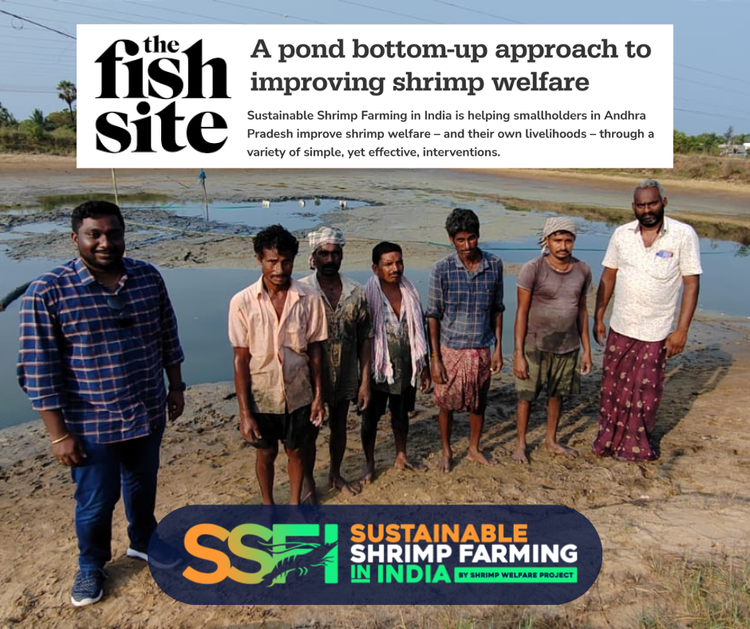
🇮🇳 Progress often requires some rebranding and operational changes. And as our smallholder farmer engagement in India has grown, we’ve reached a new milestone: SSFI (formerly Sustainable Shrimp Farmers of India) has officially spun out as its own independent organisation and became a registered entity in India, under the new name Sustainable Shrimp Farming in India.

If you’ve been following our work, you know SSFI has spent the past four years tackling some of aquaculture's grimiest (literally) challenges, including: toxic sludge buildup in shrimp ponds across Andhra Pradesh. As SSFI Director, Sri Rang Kavali, puts it:

“At the beginning we were in push mode – convincing farmers that desludging mattered. Now we get daily calls. We’ve moved from push to pull.”

📰 Read the exclusive story in The Fish Site.

SSFI has already reached nearly 200 acres across 70 farms. Over the next year, some of SSFI’s goals include:

🦐Piloting improved aeration techniques, 

🦐Exploring duckweed and seaweed cultivation as alternative income streams for vulnerable farmers,

🦐Scaling to 250 acres of de-sludged ponds, and of course

🦐Laying further groundwork for humane slaughter practices.


This spin-out is about growth, local ownership, and stronger impact. SSFI is building an initiative that is rooted in India’s context while staying focused on what matters through highly practical and collaborative work.

 Follow SSFI on Facebook 
 

What Does the Science Say About Humane Shrimp Stunning?

We commissioned a comprehensive literature review to find out. The new white paper, Assessing Humane Stunning Methods for Shrimp, synthesises the available behavioural, physiological, and electrophysiological evidence on two key methods: chilling (ice slurry) and electrical stunning.

🔍 Chilling is the more common practice, but it’s highly variable and does not reliably induce rapid insensibility maintained until death. Electrophysiological studies show that neural activity and sensory responsiveness can persist even when chilled shrimp appear completely immobile. 

🔎 Electrical stunning, by contrast, has been shown to produce rapid, reliable loss of sensibility across decapod crustacean species, which is what our team has observed firsthand at shrimp farms around the world.

As regulatory scrutiny of crustacean slaughter practices grows and more countries recognise decapods as sentient beings, the industry needs clear, science-backed guidance on what humane stunning actually looks like in practice. 

You can find the full paper, among others, on our freshly revamped Research Page!

 Read the Paper 
 

Events

In the past month, we attended:

  • Sentient Futures Summit, Bay Area (February 6 → February 8)

  • World Seafood Congress, Chennai, India (February 9 → February 11)

  • EA Global, Bay Area (February 13 → February 15)

In the next few months, we look forward to attending:

  • VietShrimp, Ho Chi Minh City, Vietnam (March 18 → March 20)

  • Seafood Expo Global, Barcelona, Spain (April 21 → April 23)


Dive Deeper

Retailer Momentum:

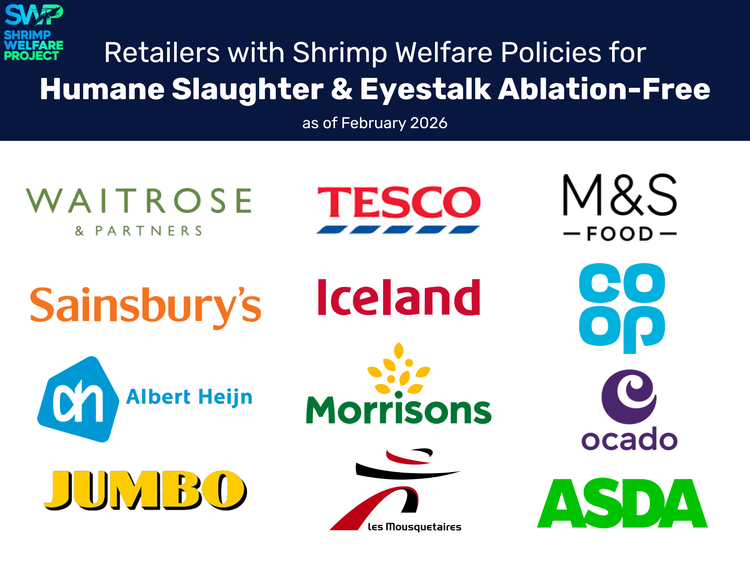
  • Asda rides the shrimp welfare wave: the UK supermarket giant committed to pre-slaughter electrical stunning by 2028 and ablation-free broodstock by 2027, bringing the total to 12 retailer commitments across the UK and Europe. ➜ Read the full coverage in Fish Farmer Magazine

Check out our blog: Where Can I Purchase Humanely Farmed Shrimps?

If you want to learn more about shrimp welfare and the shrimp farming industry:

  • Humane slaughter in Vietnam: Tien Phong, one of Vietnam’s leading newspapers, reports on the growing requirement that shrimp exported to EU markets must be fully stunned before slaughter ➜ Read more (in Vietnamese)

  • Aquatic animal welfare takes root in Ghana: A new report from AWASH and SHARED AFRICA assesses welfare conditions in Ghana's booming tilapia aquaculture sector, and its lead author has since been invited to help shape the country's new fisheries regulations. ➜ See the full report

  • High-tech shrimp farming pilot in UAE: Shrimp farming company Atarraya is working with a partner in the United Arab Emirates to pilot its new ‘shrimp box’ production system there. ➜ Learn about the project in AgFunderNews

Job opportunities in aquatic animal welfare:

  • Chief Program Officer - Aquatic Life Institute

  • Policy and Food Systems Specialist - Aquatic Life Institute

  • Community Specialist, Aquatic Animal Alliance - Aquatic Life Institute

  • Request for Proposals: Humane Fish Slaughter Research/Prototypes - Coefficient Giving

 
Shrimp Welfare Project
facebook linkedin instagram

International House, 45-55 Commercial Street, London, E1 7BD, UK

Powered by Squarespace

Unsubscribe